Meet the 2025-2026 Leadership Academy Fellows
Also click here to learn about our senior fellows, from previous Leadership Academy cohorts.
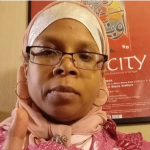 Batina Bamba (she/her) grew up in Queens, and has been serving her community since high school. She currently serves as a chaplain in training and women’s spiritual song leader at the Mosque of Islamic Brotherhood, a leader of the International Sufi School, and an active member of organizations like Faith in New York, NY Disaster Interfaith Services, and the Sisterhood of Salaam Shalom. Batina earned a BA in government at Wesleyan University, then served as an educator for over a decade. She discovered Sufism in the 1990s, and studied for two years under the metaphysician Sheikh Hesham Jaaber – a peace activist known for rescuing Malcolm X’s body, and giving him a proper Islamic burial. During this time, she was blessed by interfaith activist and presidential candidate Sheikh Abdoulaye Dieye to be his female representative for the International Sufi School. As a mother and an educator, she works to ensure that young NYers can access the culture and languages that will help them connect with the strength of a rich African heritage.
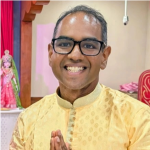 Ishwar Bridgelal (he/him) strives to harmonize his Hindu faith, service to immigrant-origin people, and community mental health research. As a doctoral candidate in educational psychology at Temple University, he studies the identity development of immigrant-origin students who have experienced complex trauma. He further serves as an aide to people with intellectual and developmental disabilities for AHRC Nassau. Ishwar applies his trauma-informed lens to protecting immigrant-origin people and their families through progressive Hindu organizations such as Sadhana Coalition of Progressive Hindus and Hindus for Human Rights, for example by supporting mandir-based immigrant sanctuary building. Ishwar is a native of Trinidad, a descendant of Indian indentured laborers, and a devotee at the Shri Shakti Mariammaa Temple in Ozone Park, Queens.
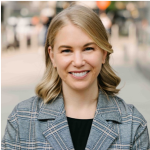 Alexandra (“Ally”) Coll (she/her) is a social justice lawyer, educator, and community organizer who draws inspiration and guidance from her ancestral Ashkenazi Jewish heritage and her Episcopal Christian faith. She is an Associate Professor at the City University of New York (CUNY) School of Law, where she teaches courses on the modern administrative state, federal courts, and civil rights, training students to use the law in service of human needs. Her scholarship explores the legal and institutional structures that shape the advancement of equal rights. Before joining CUNY, she served as a nonprofit leader, litigator, and policymaker in Washington D.C., including as an aide in both the U.S. House and Senate. In her faith community, Ally co-chairs the Migrant Welcome Committee at St. Bartholomew’s Episcopal Church and previously served as the Director of Justice and Compassion at the Table Church, an LGBTQ+ affirming, anti-racist Christian congregation in Washington DC.
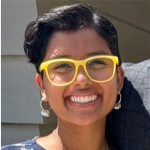 Sam Cook-Merino (she/ella) is an active member of Altagracia Faith and Justice Works, an organization rooted in Catholic social teachings that works to empower Inwood residents to put their faith into action and promote social justice. She is a first-year Master of Social Work student at Smith College, and earned her bachelor’s degree in Spanish and Philosophy from Ohio Wesleyan University – an experience that guided her journey to New York City. There, she has worked as a podcast intern, mental health advocate, and professional interpreter and translator. Originally from Los Angeles, California, Sam draws on her lived experience to examine how systemic inequities manifest similarly across low-income communities on both the East and West Coasts. As a passionate activist and organizer for mental health, housing, and environmental justice, she is committed to advancing dignified living conditions for communities of color. Sam firmly believes that caring for shared physical spaces in BIPOC communities is essential to supporting the mental health of New York City’s backbone.
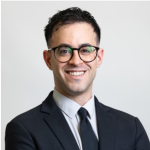 Tales Cunha (he/him) is a Brazilian international advisor and emerging social entrepreneur whose work bridges management, data, and design to help organizations translate values into strategies that advance equity, dignity, and community well-being. He has over five years of experience supporting businesses, governments, and mission-driven organizations across the U.S., Latin America, Europe, and Africa. Rooted in both Episcopal Christian and Sephardic Jewish traditions, Tales approaches leadership as a vocation of service, dialogue, and systemic transformation. A Young Leader at the Cathedral of St. John the Divine, he currently advises coalitions addressing labor trafficking in Westchester County and is developing a consulting initiative to enhance the impact of faith-based food assistance programs. Tales holds a Master of International Affairs from Columbia University and a Bachelor of Architecture and Urban Planning from the Federal University of Paraná. He lives in Harlem with his partner, Kaylee, and their dog, Leia.
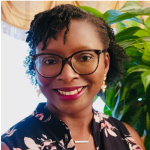 Rev. Alisa Cupid (she/her) is an ordained minister, attorney, and public policy advocate dedicated to advancing equity, inclusion, and social justice. She serves as Program Director of the Allen Women’s Resource Center—an emergency domestic violence shelter founded by the Greater Allen A.M.E. Cathedral of New York—where she also serves on the ministerial team. In her ministry and advocacy, Rev. Cupid works to empower survivors, strengthen community partnerships, and engage faith leaders in addressing gender-based violence. Her work reflects a deep commitment to creating inclusive institutions and uplifting women, children, and families. Rev. Cupid holds a Master of Divinity and a Certificate in Theology, Women, and Gender from Princeton Theological Seminary, as well as a Juris Doctor and Master of Public Administration from the University of Akron. She has also engaged in hospital chaplaincy and global study and missions in Ghana, South Africa, Haiti, Mozambique, Israel, and the State of Palestine.
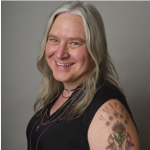 Jan Eckstein (she/her) has decades of experience in leading and maintaining spiritually-based 12-step recovery groups, as well as working with individuals trying to obtain or maintain recovery. She is one of the organizers of the Tompkins Distro mutual aid group, serving hundreds of community members every weekend in a loving, anarchist framework. Mutual aid has also brought her into food rescue networks in New York City. Jan has a Bachelors degree from Brown University and a Masters of Public Administration from Columbia University. She has had an enjoyable 35-year career in finance as an economist, and as that part of her path winds down she is responding to the accelerating attack on trans humans in America by building joyful spiritual community for all queer and trans folks.
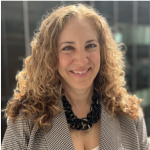 Laura Edidin (she/her) has sought justice for survivors of sexual violence, police misconduct, and hate crimes in a career spanning the public, private, and nonprofit sectors. She currently is the Senior VP of Programs and Partnerships at Women Creating Change. In previous roles, she has served as the founding Director of Legal Services for the NYC Anti-Violence Project, the country’s largest LGBTQ crime victim agency; as an Assistant United States Attorney for the Eastern District of New York; on the staff of the NYC Civilian Complaint Review Board; as Chief of the Human Trafficking Unit in the Brooklyn DA’s Office; and as Chief Special Counsel for Ethics, Risk, and Compliance in the Governor’s Office. Laura is an active member of the Sisterhood of Salaam Shalom, Friends of Standing Together NYC, and the American Friends of Combatants for Peace. She sits on the board of the New York Jewish Agenda. Laura has been a lay leader at her synagogue in Brooklyn, most enjoyably when she co-chaired a women’s seder with her two daughters.
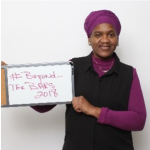 Selina Fulford (she/her) is a public health professional who currently works at the NYC Department of Health & Mental Hygiene, providing services to assist New Yorkers in need, and to educate on mental health preparedness. She also considers herself an advocate and artivist, where she is a part of the Right/Write to Heal Initiative with the Center for Justice at Columbia University’s School of Social Work. The mission of this group is to empower women to write and share their stories to humanize the collective experiences of women who are incarcerated or formerly incarcerated. Selina is also a devout Muslim and member of Masjid Sabur where she assists in the distribution of food for the members of the Bronx community. She also is dedicated to ending drug addiction and the overdosing of many of the members of the Bronx community from the fentanyl phenomenon which has become a public health crisis in New York. Selina has completed several college degrees which she obtained after being released from an upstate women’s prison.
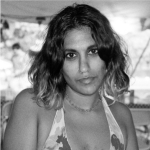 Vrinda Jagota (she/her), is the New York City Advocacy Organizer at Hindus for Human Rights, an organization advocating for civil and human rights in South Asia and North America, rooted in the Hindu values of shanti (peace), nyaya (justice), and satya (truth). Vrinda is also a journalist, and a member organizer with the Newsguild of New York, a labor union for NYC news professionals. She is a writer and editor, with bylines in Pitchfork, The LA Review of Books, NPR Music, MSNBC, The Cut, and TASTE, among other places. Her journalism and organizing focus on South Asian diasporic music, arts, and communities, whether she’s critiquing Rupi Kaur’s surface level identity politics, diving into the wondrous world of Abida Parveen’s Sufi music, or planning interfaith community events in Harlem and Richmond Hill.
Iyalorisa Àjíké Kendrick As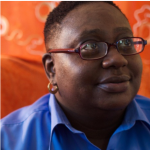 egún (she/her) is an Iyalorisa in the Lukumi Orisa tradition. She is a member of the Orisa religious house Omi Ero Ile Yemoja, which stems from the lineage of Ile Atare, and DOYA: Descendants of Yoruba in America. She was initiated as a priest of the Orisa ?àngó in 1995. A poet, writer, life coach, and spiritual leader, Àjíké weaves together sacred imagination, African traditional spirituality, and community healing. Grounded in her local ilé, her work reaches outward to nurture and inspire a broader spiritual community, helping spiritually-minded leaders to provide effective leadership to those they are called to serve. Her own leadership is rooted in the belief that imagination is sacred, creativity is civic action, and that storytelling and ritual can heal divides. She serves through cultivating spaces where art and spirit meet to inspire collective renewal, and is committed to interfaith dialogue, cultural preservation, and spiritual wellness. Àjíké holds a MA in Individualized Study with a concentration in Leadership Development & Women’s Studies from New York University, and a BA in International Relations from Shaw University.
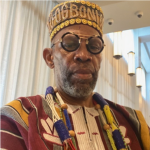 Dr. Fáyemi Opatolá (he/him) is an Ifá priest, or Babalawo, as well as a king in the Ògbóni tradition, a mental health clinician, a cultural preservationist, and a community strategist. His life’s work is the seamless weaving of ancient Yoruba law with modern governance, ensuring that both the spirit and the people thrive. He serves as the paramount king of the Royal Ògbóni Dynasty in the United States, a centuries-old institution rooted in ancestral law, justice, and spiritual governance. He is also the founder and head of Ile Olódùmarè Ife Ifá in the Bronx, a temple devoted to Ifá, Òrì?à, ??gún, and Ògbóni rites. He is a licensed mental health counselor, specializing in substance use disorder and mental health care, and integrating clinical healing with spiritual practice. He is also the founder of ATAUSA.Foundation, which offers programs in housing advocacy, youth mentorship, immigrant resources, and community wellness, and manages IRS-compliant religious structures, grant writing, credentialing, and strategic planning.
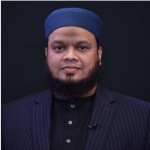 Imam Muhammad Shahidullah (he/him) is a peace ambassador, first responder, chaplain, media personality, and multifaith scholar. A trained imam and community organizer, he actively serves as Vice President of UNA-USA Queens, Executive Director of SDG Academy NY, Director of C3, and Chief Advisor of the Peace Center USA. He also works with the NYPD Clergy Council, NYC Mayor’s Faith-Based Advisory Council, and Queens Borough President’s Office, among others. Founder of Elhaam Academy, a NYS and DOE-approved K-12 private school, Shahidullah launched the signature program “Hate to Hope.” He received the U.S. Presidential Lifetime Achievement Award (2021) and the World Peace Award (2023). He holds master’s degrees in Islamic History and Culture from the University of Dhaka, in Theology from Sarsina Madrasa, and in Cyber Security from VUST, Virginia, USA. Author of seven books and many articles, he has attended more than 100 international conferences.
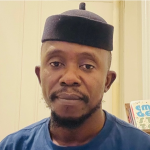 Melvin Sharty (he/him) is the Programme Manager at Nonviolent Peaceforce in New York, where he leads initiatives to strengthen community safety, prevent violence, and provide protective accompaniment for BIPOC communities. Raised in West Africa, Melvin brings a global perspective to his work, blending peacebuilding, human rights, and unarmed civilian protection. Over the past several years, he has coordinated safety trainings for Muslim youth, LGBTQ+ immigrant communities, and participated in faith-based initiatives, supporting thousands of participants across New York City and beyond. Melvin holds a master’s degree in international Peace Studies and Global Affairs from the University of Notre Dame’s Kroc Institute for International Peace Studies, and is the author of a novella and short stories exploring themes of identity, resilience, and social justice. Throughout his career, he has focused on building inclusive spaces that empower communities to respond to threats, strengthen social cohesion, and foster resilience across diverse populations.
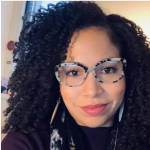 Dr. Monika Son (she/her/ella) is an educator, consultant, certified Embodied Leadership Coach, and trauma-informed facilitator, with over two decades of experience at the intersection of psychology, education, and social justice. She is also a longtime student in the Soto Zen Buddhist lineage, and a graduate of the Upaya Zen Center’s Buddhist Chaplaincy program. A trained psychologist and expert facilitator, Dr. Son works to create spaces that explore identity, power, privilege, and systemic oppression. Her chaplaincy focuses on supporting resilience, action, and hope in these times, including cultivating healing from systemic oppression, fostering collective accountability, joy, and vision, and growing interfaith community and care. She is currently teaching “Knowledge and Power: Issues of Women’s Leadership” at Rutgers University, and serving as a Spiritual Advisor for Global and Spiritual Life at NYU. As a native New Yorker, daughter of Dominican immigrants, and mother of two mixed-race sons, Monika embodies an intergenerational and pluriversal perspective.
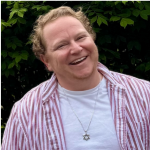 Dubbs Weinblatt (they/them) is the Social Justice Manager at SAJ: Judaism that Stands for All, a historic synagogue on the Upper West Side. They are also the Founder and CEO of Thank You For Coming Out, which celebrates LGBTQIA+ stories and identities through DEIB trainings and workshops, their podcast, improv show, and other forms of art and storytelling; and the Co-Founder and Executive Producer of Craft Your Truth, an organization that encourages LGBTQ folks to use any kind of performance art as a way to express their stories and connect with their communities. Dubbs’ writing has been featured on the website Hey, Alma, and in the books Welcome to Kweendom, HYPHEN, and Redoing Gender. They are a recipient of the GCN Impact Awards, was named one of Logo’s “NewNowNext 6 Inspiring LGBTQ Jewish Activists You Should Be Following,” and was recently named one of Jewish Week’s “36 Under 36.” Dubbs has spoken at campuses and consulted with organizations and companies nationwide. They find joy in sharing their story and creating spaces for others to share theirs.
 Elizabeth Yepez (she/her) is a longtime New Yorker who was influenced early by a mix of ’90s conservative evangelicalism, union stories at dinner, and so, so many books. In her twenties, she learned about the unique role faith communities play in interrupting — or enabling — violence through volunteer work with survivors of domestic violence. Elizabeth is now an active member of a Mennonite (Anabaptist) church, and through her denomination she has been involved in the Coalition to Dismantle the Doctrine of Discovery’s Repair Network. Alongside her church, she followed the leadership of indigenous women in fundraising, educating, and endorsing in a variety of ways the upholding of the Indian Child Welfare Act by the Supreme Court in 2023 (in Haaland v. Brackeen). Currently, she is part of a landback working group comprised of Mennonites and non-Mennonites alike in partnership with the Repair Network and the Shinnecock Tribe in Long Island, New York. She is honored to be included in the 2025-2026 Interfaith Civic Leadership Academy cohort.